Il Pomo d’Oro review – Monteverdi psalm settings at Wigmore Hall
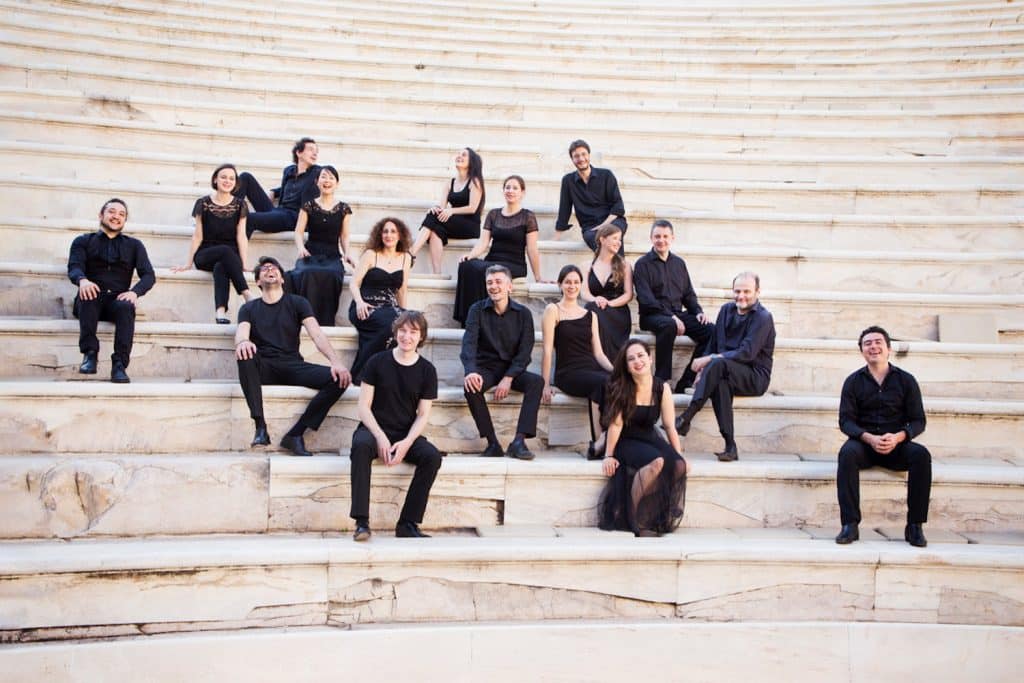
Monteverdi’s Selva morale e spirituale, published in 1641 is an anthology of some 40 sacred and spiritual works, including several settings of psalms suitable to be sung at the office of Vespers. On Sunday evening, early-music ensemble Il Pomo d’Oro performed a selection of these psalms, grouped together so as to provide an imagined Vespers service, given a title (whose origin was not explained) Vespro di San Giovanni Battista (‘Vespers of St John Baptist’).
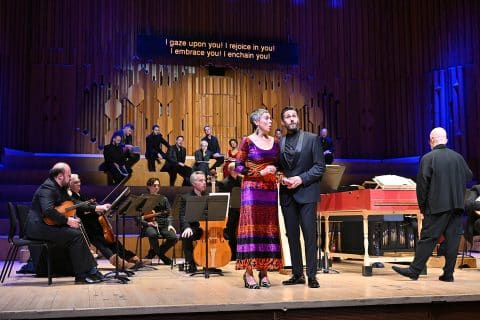
Notwithstanding the somewhat artificial construct of the evening, the music performed was of the highest quality. The five instruments (two violins, a double bass/violone, a theorbo and an organ) sat in perfect balance with the eight voices, led by tenor, Giuseppe Maletto – whether these were singing as a full complement (as in the opening Dixit Dominus), as four (Confitebor tibi Domine) or two (Salve Regina).
Indeed, poise, balance, blend, and a complete understanding of the idiom was to the fore in all of the seven Monteverdi pieces performed, whether this was in the composer’s classic contrasts between agile phrases sung in duet (two sopranos alternating with two tenors in Laudate Dominum omnes gentes, for example) and the more homophonic block shifting of chordal material from all singers, or from Monteverdi’s playfulness with tempo – setting busy, triple-time, ‘pattering’ passages against slower, duple-time sections.
Each of the voices in the group has character, so, once again, a degree of timbral contrast was established, but, the whole ensemble, when performing tutti, had no sharp edges, and the handovers between vocal parts were adroitly handled to ensure evenness of tone.

All of the above were brought together into a kind of ‘exhibition work’ in the evening’s final piece, an 8-voice Magnificat (Primo), where both polyphony and expressive Baroque vocal tropes came together: inexorable homophonic cadences at the opening seemed to echo Gabriel’s message, and Mary’s response came in a sequence of duets and trios, each encapsulating, through the intensity of vocal clashes, dynamic, rhythmic excitement, or the timbral quality of the underlying instrumentation (some splendid theorbo and bass punches for ‘Fecit potentia’), the mood of each verse.
There is a certain predictability with this type of music, and, yes, Monteverdi’s patterns became a little obvious and repetitive, even when performed well. Unexpected moments of special delight, though, did occasionally stand out: the light and frothy setting of the ‘Gloria’ at the end of Dixit Dominus; the tenor decoration of the ‘Amen’ in Confitebor; the rapid and cleverly decorated ‘exaltabitur’ and ‘irascetur’ in Dixit Dominus, and, above all, the exquisite twining of the two tenor lines around each other as Raffaele Giordani and Roberto Rilievi executed a Salve Regina packed full of melismatic word painting.
Allowing a couple of breaks for the singers, the concert also featured a pair of instrumental items: sonatas for two violins and continuo by Dario Castello and Francesco Turini. Here, the instruments came into their own, and the two violinists (Angelo Calvo and Valentina Mattiussi), who were tacet for several of the choral numbers, were given their place in the sun. As in the Monteverdi, contrasts between slow intensity and virtuosic busyness, as well as duple and triple time, pervade the two sonatas, and the pair gave thrilling accounts of all of this, supported by some enjoyable textural variety (plenty of thrum and twang, as well as gentle organ underlay) from the continuo section.