London Philharmonic Orchestra review – Robin Ticciati conducts Schumann and Mahler

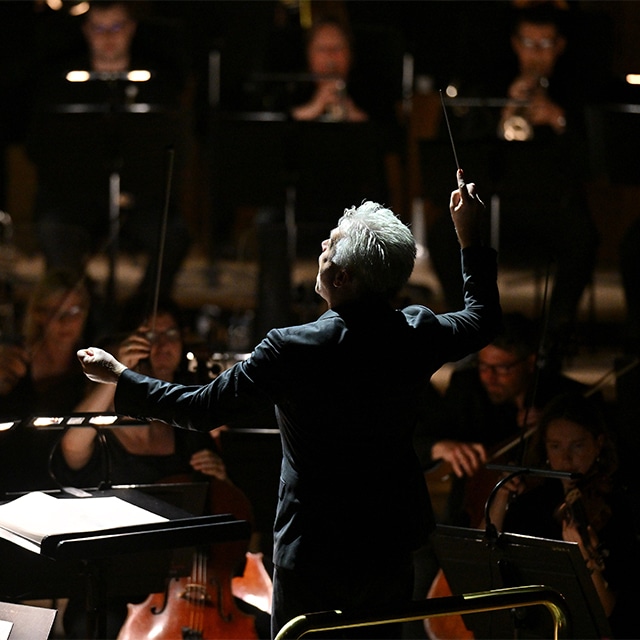
There was a sense of expectation in the air at the Royal Festival Hall on Wednesday night as Robin Ticciati led the London Philharmonic Orchestra in a programme that promised introspection and grandeur in equal measure. A pairing of Schumann’s Piano Concerto with Mahler’s Fifth Symphony is no small undertaking; one draws the listener into an intimate musical dialogue, while the other hurls them into the throes of existential struggle before emerging, finally, into light. With Francesco Piemontesi at the keyboard and Ticciati on the podium, the evening unfolded as an exploration of contrasts – personal and universal, lyric and dramatic, delicate and titanic.
Schumann’s Piano Concerto thrives on a finely balanced partnership between soloist and orchestra, and in Piemontesi and Ticciati, we had two musicians intent on realising its conversational spirit. From the opening flourish, Piemontesi avoided any sense of grandstanding, instead allowing the music to unfold with a natural ease, his phrasing fluid and supple. He has an unerring ability to find the shape of a phrase and let it breathe, though occasionally his use of rubato felt a touch indulgent. Ticciati, however, ensured the LPO’s accompaniment remained responsive and alert, maintaining the work’s momentum.
The first movement had a lightness of touch that let Schumann’s melodic ingenuity shine, though at times, one might have wished for a little more fire – moments that could have soared too often felt restrained. Yet there was no denying the refinement of Piemontesi’s playing, particularly in the second movement, where he and the LPO’s woodwind section engaged in a beautifully shaped dialogue, each phrase passing between them like a secret whispered and answered. The finale brought a sense of release, Piemontesi’s articulation crisp, his interplay with the orchestra playful yet poised. If the performance didn’t always ignite, it was still a reading of elegance and clarity, one that prioritised poetry over bravado.
As an encore, Piemontesi offered an exquisite rendition of Schubert’s Impromptu in G flat, Op.90 No.3, a moment of pure intimacy that hushed the hall in rapt attention. His touch was luminous, his phrasing delicate yet deeply expressive.
“…the evening unfolded as an exploration of contrasts…”

After the interval came Mahler’s vast Fifth Symphony, a work that demands both architectural control and an acute awareness of its shifting emotional terrain. Ticciati is a conductor who favours long lines over episodic gesture, and from the opening trumpet’s clarion call – brilliantly delivered by Paul Beniston – he set out a clear and measured trajectory. The Funeral March was stately, weighty but never leaden, its tread inexorable yet never oppressive. Ticciati allowed the tensions in the score to simmer rather than explode, favouring structural cohesion over theatrical intensity.
The second movement, however, erupted with ferocious energy, the LPO strings biting into Mahler’s jagged rhythms with relish. Here was the sense of unbridled turmoil that had been held in check during the opening movement. Ticciati let the brass snarl, the percussion thunder, and the strings seethe – this was Mahler at his most febrile, and the LPO rose to the challenge magnificently.
Then came the Scherzo, the great pivot of the symphony, its waltzing rhythms teetering between elegance and grotesquery. Ticciati kept the textures buoyant, never allowing the dance to sag under its own weight, while the solo horn – played with wonderful fluency and warmth by John Ryan – provided an anchor amid the surrounding tempest. The famous Adagietto was beautifully played, its lyrical lines shaped with care and hushed intensity. Ticciati avoided overt sentimentality, allowing the music to unfold naturally, with just the right amount of ebb and flow. The climactic moment was given the space it needed before the movement receded into its final, wistful sigh.
The Rondo-Finale was a joy. Ticciati revelled in its sheer exuberance, driving the LPO forward with rhythmic vitality and an infectious sense of celebration. Here, at last, was the full release of Mahler’s pent-up energy, and the orchestra responded with playing of real zest and precision. The brass blazed, the counterpoint was crisply delineated, and as the symphony surged towards its radiant conclusion, the inevitability of the journey Ticciati had mapped out became clear.
Beyond its structural command, what made this Mahler so compelling was the sheer range of sound Ticciati drew from his players – the colours and textural clarity were phenomenal, the dynamic range astonishing. The LPO, as it has proved time and again, is at the top of its game right now, and this glorious performance only helped to cement that view.