LPO review – Edward Gardner conducts León, Grieg and Strauss

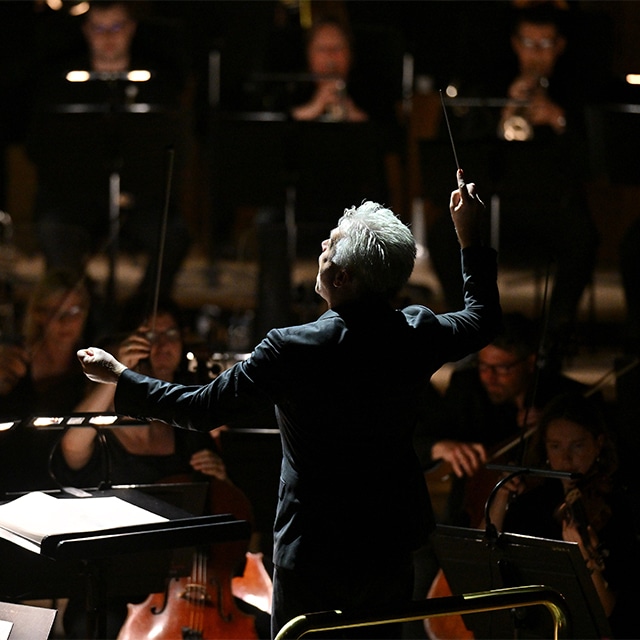
Friday night’s concert at the Royal Festival Hall turned out to be an evening of raw energy, staggering virtuosity, and breathtaking orchestral storytelling. With Edward Gardner at the helm, the London Philharmonic Orchestra (LPO) tackled a thrillingly diverse programme, featuring the European premiere of Tania León’s Pasajes, Grieg’s ever-popular Piano Concerto, and Richard Strauss’ monumental An Alpine Symphony. It was an evening that mixed moments of frustration with sheer, unfiltered exhilaration.
The concert opened with Tania León’s Pasajes, a work that promised to deliver innovation but ultimately struggled to find a convincing identity. While Gardner and the LPO gave the piece every chance to shine, it never really coalesced into something memorable. León’s orchestration had some interesting moments, and there were hints of Barber and Ravel lurking beneath the surface, but the piece felt restless, as if constantly searching for an idea that never quite materialised. There were moments of intrigue – brief flashes of rhythmic drive or textural brilliance – but they were too fleeting to leave a lasting impression. On paper, the piece promised much, but in reality it never quite found its footing.
Unfortunately, Russian pianist Alexandra Dovgan was unable to appear due to visa issues, so Steven Osborne stepped in at short notice and injected some much needed electricity into the evening’s proceedings. From the first thunderous chords, it was clear that Osborne more than had the measure of Grieg’s Piano Concerto. He played with muscularity and flair, his bold phrasing and rhythmic incisiveness driving the first movement forward with unrelenting energy. The second movement couldn’t have been more different, with Osborne caressing the keys delicately, allowing the music to unfold with a quiet, poetic inevitability. The finale, however, was something of a wild ride. Perhaps too eager to wring every last drop of incisiveness from the Nordic dance rhythms that permeate the movement, Osborne pushed the tempo to the brink, which resulted in a couple of slip-ups. But his conviction and sheer bravado carried the performance through, turning these imperfections into part of an utterly thrilling musical experience. And in doing so, he proved to be an inspired last-minute replacement.
“…an evening that mixed moments of frustration with sheer, unfiltered exhilaration”
Richard Strauss’ An Alpine Symphony is a monumental work – an orchestral juggernaut that demands precision, stamina, and above all, vision. Under Gardner’s direction, the LPO delivered a performance that was spectacular in its scope. From the hushed anticipation of the opening (the stillness before the climb) to the explosion of sunlight at the summit, Gardner kept the music surging forward, ensuring that every detail, every colour, and every shift in atmosphere was vividly drawn. For a work that can meander in the wrong hands, Gardner’s steadfast vision gave notice that this was going to be an exceptional performance – and so it turned out to be.
The ascent up the mountain was thrilling – woodwinds brilliantly evoking the dawn chorus, shimmering strings giving the impression of sun-dappled meadows, while the brass blazed as we approached the summit. By the time the storm hit, the sheer force of the orchestra was almost overwhelming – swirling strings, crashing percussion, and roaring brass conjuring an elemental power that felt almost unrestrained. The visceral impact was extraordinary. But crucially, Gardner never let the tightly-knit structure unravel. Even in its most bombastic moments, this performance never felt overblown or opaque. Instead, he maintained a razor-sharp sense of momentum, sculpting the work’s vast musical architecture into something gripping and profoundly exhilarating.
As night fell once more, and the music faded away, the spell remained unbroken. This was a performance that managed to capture both the work’s grandeur and its quiet introspection – music that towered overhead like the Alps, yet still allowed room for the smallest, most intricate details.
Not everything in this programme worked. León’s Pasajes felt like an idea still in search of a destination. But the Grieg and the Strauss both thrilled and inspired in equal measure. Gardner and the LPO are on electrifying form right now. Long may it continue.