LPO/Jurowski @ Royal Festival Hall, London

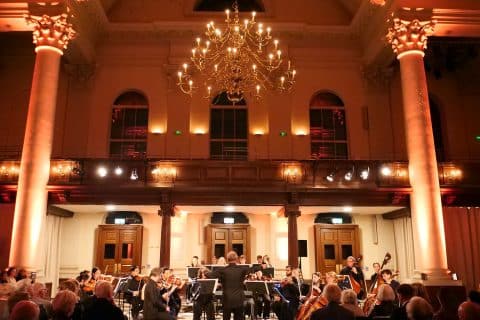
If there was a unifying theme linking the four composers featured in this London Philharmonic Orchestra concert, the programme note offered no explanation. Nevertheless, the works themselves were sufficiently unusual and engaging to fill the Royal Festival Hall to capacity, no doubt aided by the presence of Joshua Bell.
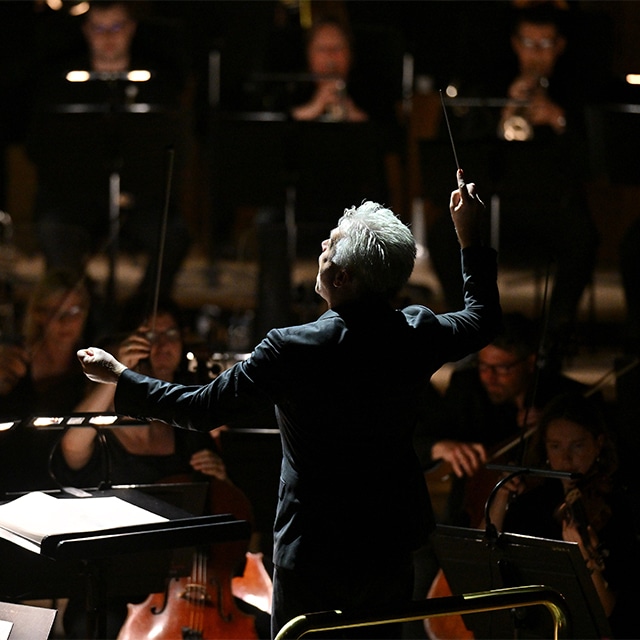
The concert opened with Mozart’s attractively concise Symphony No. 32 in G major, comprising three brief movements played without a break. Vladimir Jurowski led a spirited account that benefited from a scaled-down orchestra (just 34 strings), antiphonal violins and the use of natural trumpets.
Bell’s interpretation of Brahms’s Violin Concerto was both technically impressive and pleasurable to hear, his playing distinguished by a warm, silvery tone and restrained vibrato. With sensitive support from Jurowski, there were many illuminating moments, including the first-movement cadenza, written by Bell himself. However, the performance suffered from a lack of overall sweep and momentum, compounded by a relatively slow opening movement and a briskly taken Adagio, in which the famous oboe melody was not afforded sufficient space to unfold. The finale was certainly virtuosic, but the performance as a whole left the emotions largely unstirred.
The second half of the concert brought works by two 20th-century composers whom Jurowski has championed in recent years. The first was Zemlinsky’s lyrical, passionate – if occasionally indulgent – setting of Psalm 23 (‘The Lord is my shepherd’) from 1910, performed with refinement and warmth by the combined forces of the London Philharmonic Orchestra and Choir.
The concert concluded with Szymanowski’s opulent Symphony No. 3, ‘The Song of the Night’, composed between 1914 and 1916 and drawing on poetry by the 13th-century Persian mystic Jalāl ad-Dīn Rūmī. Scored for tenor, chorus, orchestra and organ, the work inhabits a rich, sensuous sound world of yearning and ecstatic intensity. Jurowski’s performance was full of colour and ardour, with finely judged balances and compelling climaxes. Tenor Jeremy Ovenden contributed with clarity and poise, while orchestra leader Pieter Schoeman, alongside the principal horn and trumpet, offered notable instrumental contributions. It provided a powerful and fitting conclusion to the evening.
- Further details of Royal Festival Hall concerts can be found at southbankcentre.co.uk